
Proudly Spanglish Speaking Diasporican
May 5, 2026
Published on:
Moving Past Shame & Towards Belonging
I have always been especially aware of language. As an undeniable extrovert, my desire to connect with people through (mostly) speaking and (some) listening felt especially at odds between the two languages, the more that I confronted opportunities to talk where I felt I didn’t have the language skills in Spanish that I wanted to have in order to express my personality in the same way that I did in English.
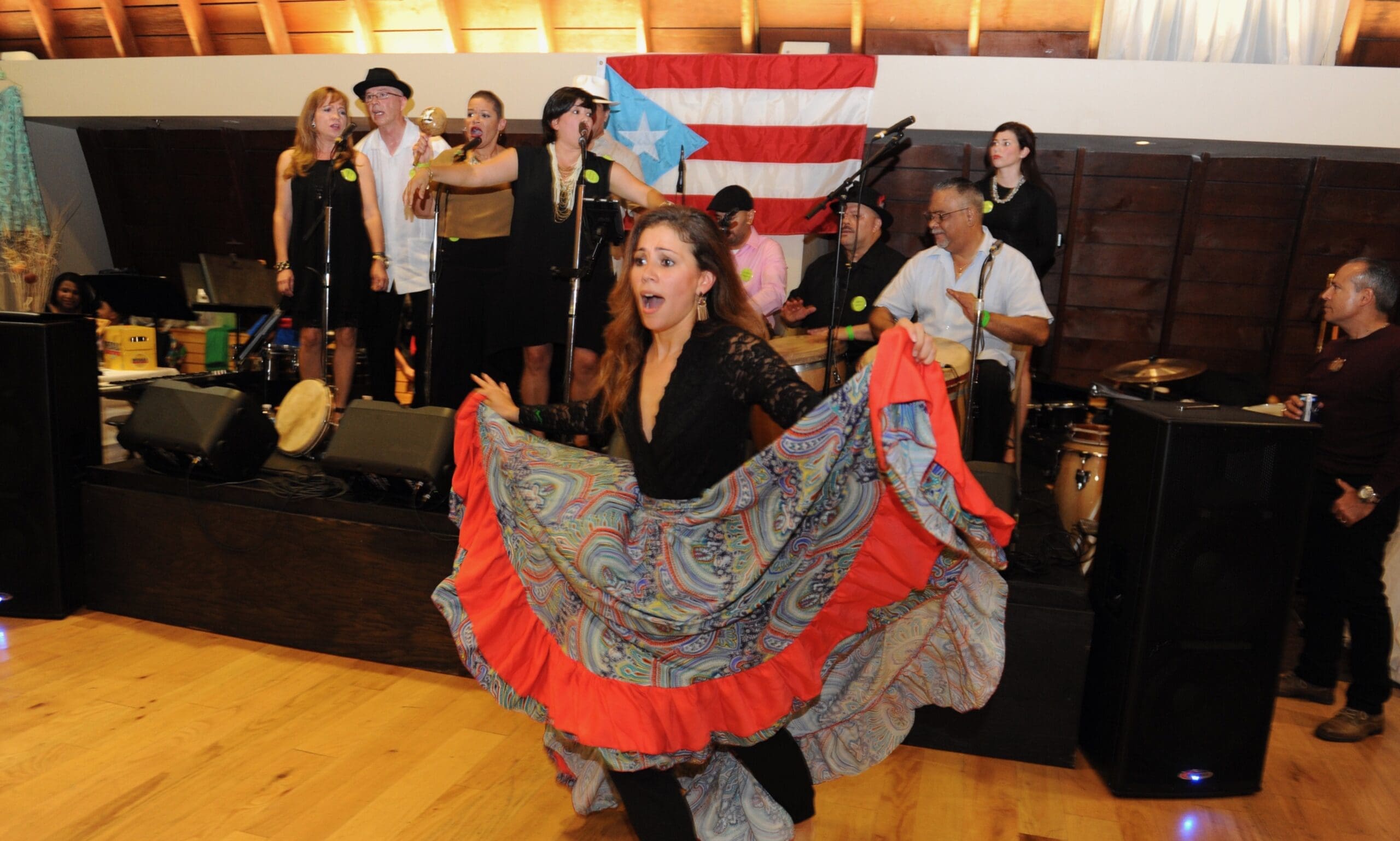
Further complicating these feelings, I quickly realized that I was not the only one who had expectations for how I spoke. Family members, school teachers, nurses, and community members would make assumptions based on my name, how I looked, or their own biases. It would take me years of exploring what it means to “belong” in the States, en Puerto Rico, in English, en español, at school, at home, etc, to get to a place where I could proudly claim my Diasporican (Puerto Rican in the diaspora) experience.
Insecurity and Anxiety
When I was young(er), I worried about not having enough confidence and self-awareness in my Puerto Rican identity to be able to have kids and a family. I worried that I would not be able to visit the island without my parents, that I would not have friends of my own, memories of my own, to visit the island without the safety net of my parents guiding my trip. That my future children would have similar insecurities about knowing “enough” Spanish, about knowing “enough” about PR culture to be accepted.
This insecurity, for many years of my life, was enough to stop me from taking risks and using my language to participate in my culture. I have one specific memory that often replays in my head where my dad told me if I was hungry, he’d pay, but I had to place the order, and as an act of being a stubborn teenager, I went without eating because I didn’t know how to say pickles, and apparently, that was enough to lock me into not participating in the order at all. But honestly, it wasn’t the word I didn’t know; it was the fear of not being enough in what I thought I did know. And if I didn’t speak, no one could “out” me as not belonging, not being Spanish-speaking enough, not being Puerto Rican enough.
Struggle & Resistance
Struggling with knowing, forgetting, remembering, shame, fear, and jealousy for most of my youth and early adulthood would lead me to the point where I knew I had to make a change. That change led me to a starting line of uncomfortable moments, with humbling obstacles, a supportive community, awareness of systemic oppression for language diversity, and ultimately a connection to myself (as I wanted to be), my family, my culture, and my community (on AND off the island).
I went from thinking that there was only one way to be Puerto Rican. One background, one language, one experience to give you your Puerto Rican badge of honor. Now I see a range of experiences that inspire me through my family, friends, mentors, leaders living on the island and in the diaspora. A range of experiences that challenge a monolithic view of Puerto Rican identity through living and practicing their Puerto Ricanness at all times, wherever they are.
I went from feelings of shame and resentment about living a life that afforded me many opportunities but stole my ability to communicate in a way that aligned with my identity… to feelings of pride and empowerment, recognizing that despite systemic forces trying to disconnect me from language and culture, I was resisting. I was resisting by relearning my home language. I was resisting by working through my insecurity. And I was resisting by pushing back against “standard language” norms. All of this is to maintain and establish connections to language, culture, and community.
What’s interesting is that some in the diaspora, despite not having grown up in PR, get to claim a location: “I’m Nuyorican,” “Soy de Chicago.” But I, a military brat, am literally from the diaspora. I spent the most time in Maryland, but I never felt from Maryland, no loyalties. What I did feel was Puertorriqueña, and that was unfortunately challenged as an identity that I wanted to claim (in certain environments).
Complexity of Puerto Rican Identity & Division
Through the years, I have learned that I am not alone in this experience. There is a lot of complexity in discussions about what the criteria for Puerto Rican identity could/should be. Further complicated by Puerto Rico’s continued colonial status with the US, removing decision-making powers from the people of Puerto Rico and instead placing them in the hands of outside groups disassociated with the language, culture, and realities of living on the island.
As a result, for many Boricuas, decisions about leaving the island, which languages to speak and learn, and who benefits from government incentives have not felt like true choices at all.
Whether through push or pull, Puerto Ricans have been navigating:
1) waves of migrations that have created questions of language, identity, and belonging
2) Circular migration—moving from the island and back—causes feelings of disconnect and shame for time and experiences away.
3) US citizens moving to Puerto Rico for tax incentives without regard for the language and culture, which creates a further rift for Boricuas in the diaspora who seek to return to the island but are associated with a “gringo takeover”.
And all of this complexity reinforces a tension between those who stay and those who leave, between those who learn English and those who refuse to, and between those who know Spanish and those who “don’t”.
English is my dominant language. I cannot deny that, as my mother prefers to read for leisure in Spanish, it is easier for me to do so in English. For a long time, I felt guilty about this. I made it my mission to read only in Spanish and tried my hardest to maintain all dialogues in Spanish, because if I stayed in Spanish, people would not figure out my dirty little secret: “Me crié en la diaspora”.
From Awareness to Reframing
But that approach of “Spanish-first-and-only/right and wrongness view” is problematic because it is exhausting and comes from a place of lack and insecurity. Judging myself for the language I didn’t know didn’t help me better prepare or learn the language. Instead, it had me replay misconjugations and “bad” pronunciations in my head in a shameful loop. These feelings are why many of us decide to distance ourselves from the experience of practicing because we are trying to embody an experience that doesn’t honor our unique talents as multilinguals reclaiming language and identity. Instead, I was able to learn more freely and speak more authentically by understanding that Spanglish is a skill that can help me access my full linguistic repertoire.
Now, as my mom says, know better, do better. I know more about how language is learned. How systems elevate certain languages (English) and oppress other languages (often Spanish, even in Puerto Rico). How learning multiple languages is different from learning your first and only language. I know that language proficiency is a spectrum, and your place on that spectrum ebbs and flows with your use and experiences with it. I know that the brain impacts how we access our language. So if we feel too much (positive and/or negative), accessing it can feel more challenging. I know that supportive communities can be the antidote to feelings of insecurity that prevent us from practicing, growing, and learning.
Conclusion
I no longer fear having a family and/or being Puerto Rican enough. I instead channel that energy into a mission to share everything I know so that my nieces, nephews, friends, family, and community members can feel more confident in their language abilities. With LUPA Talks, I have been able to connect with a joyful community. A community of individuals seeking the same safe space to practice, connect with each other, and strengthen our language and culture. We cannot grow our language skills if we don’t practice. But we cannot practice if we don’t feel confident and safe. So find a community you feel comfortable growing and learning with, and figure out what identity and belonging mean to you.
Warmly,
Dra. Rivera Pagán
P.S. If you would like to share your experiences with language policies, comment on this blog post
Leave a Reply Cancel reply
Next blog
October 6, 2026
bilingualism, culture and language, heritage spanish learners, language, language and identity, learning, multilingual, no sabo, nosabo, Spanish

August 4, 2026

July 7, 2026
#WalkTheTalk


I am interested in support for (myself, my family, my business, other)
How can I help you?

lupatalks@gmail.com
menu
Home
Resources
Events
Blog
Contact us
Social
TikTok


Back to top

© LANGUAGEPOLICYCONSULTING
Youtube