
My Sister’s Language Story: Independence to Connection

October 9, 2025
Published on:
My language hero is my sister. She is my favorite person in this world.
My sister is the story of many of us who grew up outside our home country and were told to stop practicing our home language to prioritize English. Sin embargo, she found her language and her voice through self-empowerment and now owns a business that produces traditional Puerto Rican rum in the style of Puerto Rican moonshiners. Additionally, she is a mom, prioritizing language for her daughter by teaching her Spanish, ASL, and English. AKA, she does it all.
Context
My sister, who is younger than I am, was born in Puerto Rico, specifically in Bayamón, like me. However, in the spirit of many younger siblings, she was hesitant to speak. It’s a tale as old as time: growing up outside of your home country, the pressures of the dominant language (in our case, English) become a strong pull, and families are confronted with speech and language experts that used to (mistakenly) believe bilingualism was a confusing process.
My sister is an introvert, and more importantly, she does things in her own time, in her own way.
I absorbed the people-pleasing deficiency for both of us. She was initially reluctant to speak. Legend has it, I would think I’d know what she would want/need so I didn’t let her speak. I’m sure that this is hard for many of you to believe.
Regardless, the speech-language pathologist suggested that we stop using Spanish at home because it was “confusing.” I cannot emphasize how wrong this thinking is and how it has been disproven many times. With that being said, my parents followed the expert advice of the time and stopped speaking Spanish in the home to us. For many years, we prioritized English, and as a result, the whole family began to lose Spanish fluency.
While we all used the language less at home, without the initial input to develop language ability and confidence, my sister was at a particularly significant disadvantage. Naturally, growing up feeling disconnected from a language in which there are expectations that one should “know more” because “aren’t you Puerto Rican” it was a frustrating process to begin the language journey later in life. Not to mention that the school system did not allow her to take Spanish in middle of high school because again, assumptions and expectations of language ability.
The point is, with all these systemic barriers, she had every reason to be frustrated with learning her home language, despite her desire to do so. And yet, she found a way to do so, in her time, in her way; like she always does.
Practice
When my sister went to college, she made the decision to attend Florida International University. She ended up, to our surprise and possibly even her own, choosing independently to increase her Spanish fluency in specifically Cuban/South Florida Spanish. It was a great re-entry point for her because there were no expectations for her there. She came back confident and jumped back into Spanish with the family, specifically Puerto Rican Spanish. She felt that she had gained an independent version of her language. She had grown her confidence to be able to re-access her language and culture.
She actually gained so much confidence and awareness around her language that she chose a profession that would commit her to using the language daily. As an adult, my sister decided to start a distillery with my father, selling Puerto Rican rum. Of course, that was and is a role where you will have to use your Spanish. And she leans in.
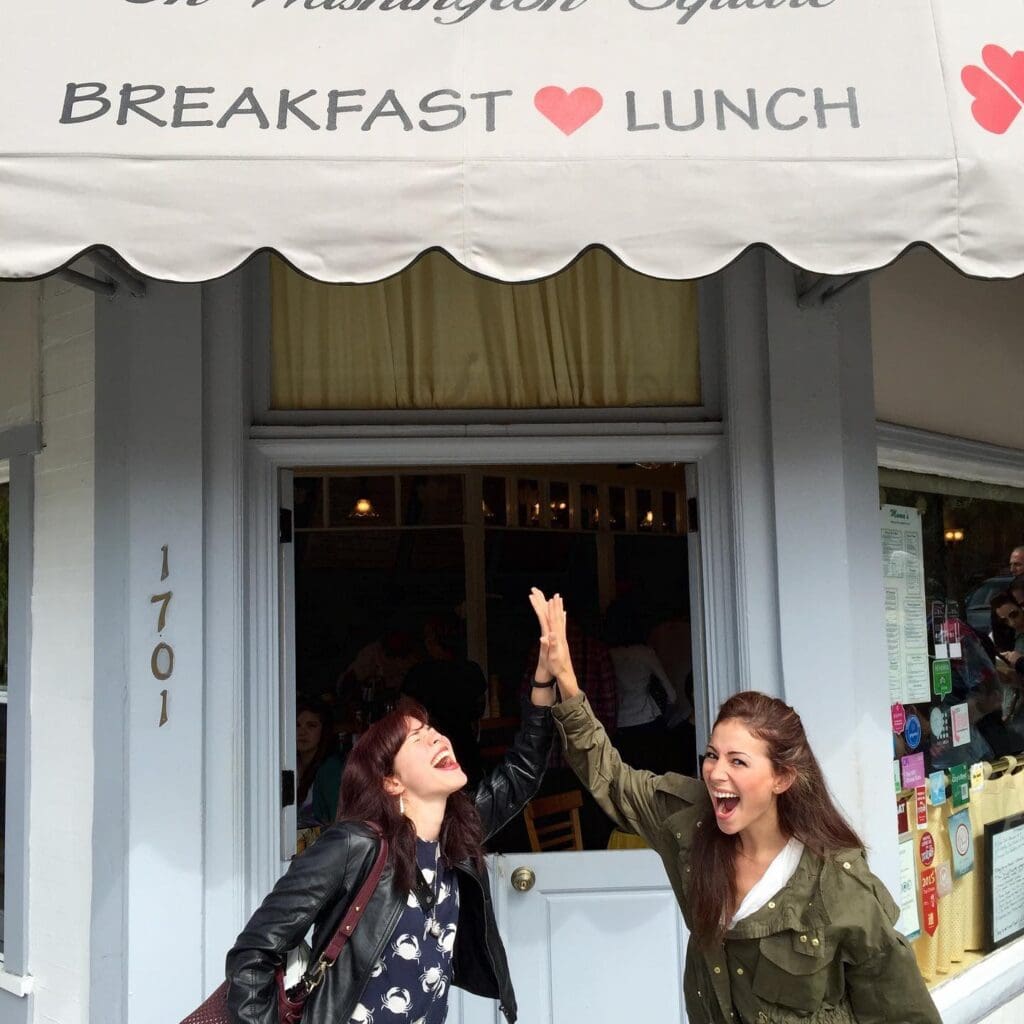
From the beginning, she has spoken Spanish fearlessly, despite occasionally missing a word; she tries, she asks, and she keeps going. When many people are nervous about speaking another language, especially when expectations are placed on their language and ability, she doesn’t shy away from opportunities to use, practice, and learn her language.
And now, she is undertaking one of the most challenging tasks of all time: raising a multilingual child. If raising a child is difficult, doing so in a monolingual society is even more challenging. And yet, she not only speaks in Spanish but also uses American Sign Language with her daughter. She continues to model language risk-taking, she commits to practicing, and she has fun with it. All of this is coming together into a brilliant, communicative, multilingual 2-year-old that surprises and delights everyone.
Conclusion
I’m forever proud of my sister for many reasons. Still, as someone who advocates for language freedom, she is a role model for me and for all. Despite societal and historical limitations on her opportunities, she persisted in accessing her language, culture, and voice.
P.S. If you would like to share your experiences with language policies, comment on this blog post
Leave a Reply
Next blog
October 6, 2026
bilingualism, culture and language, heritage spanish learners, language, language and identity, learning, multilingual, no sabo, nosabo, Spanish

August 4, 2026

July 7, 2026
#WalkTheTalk


